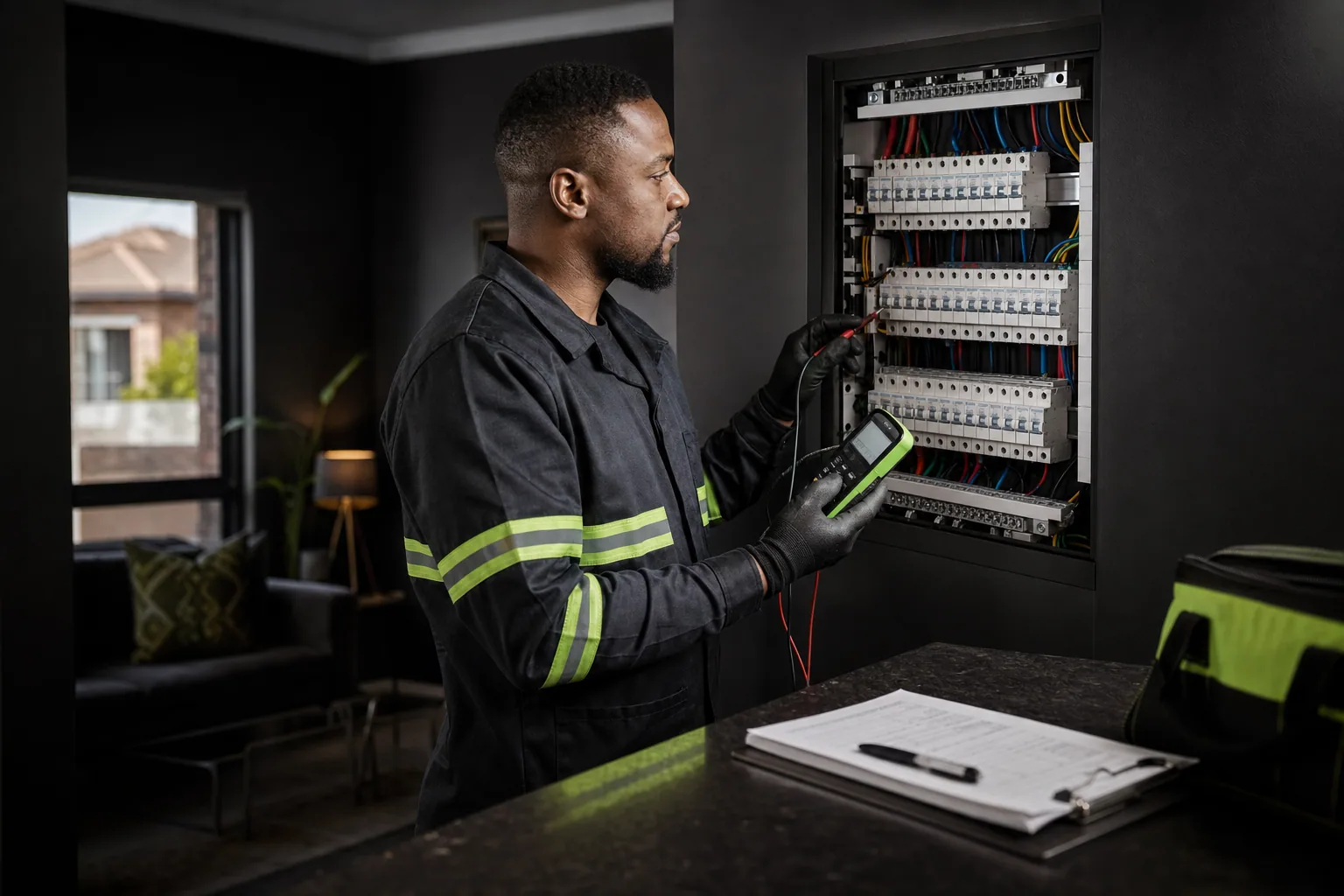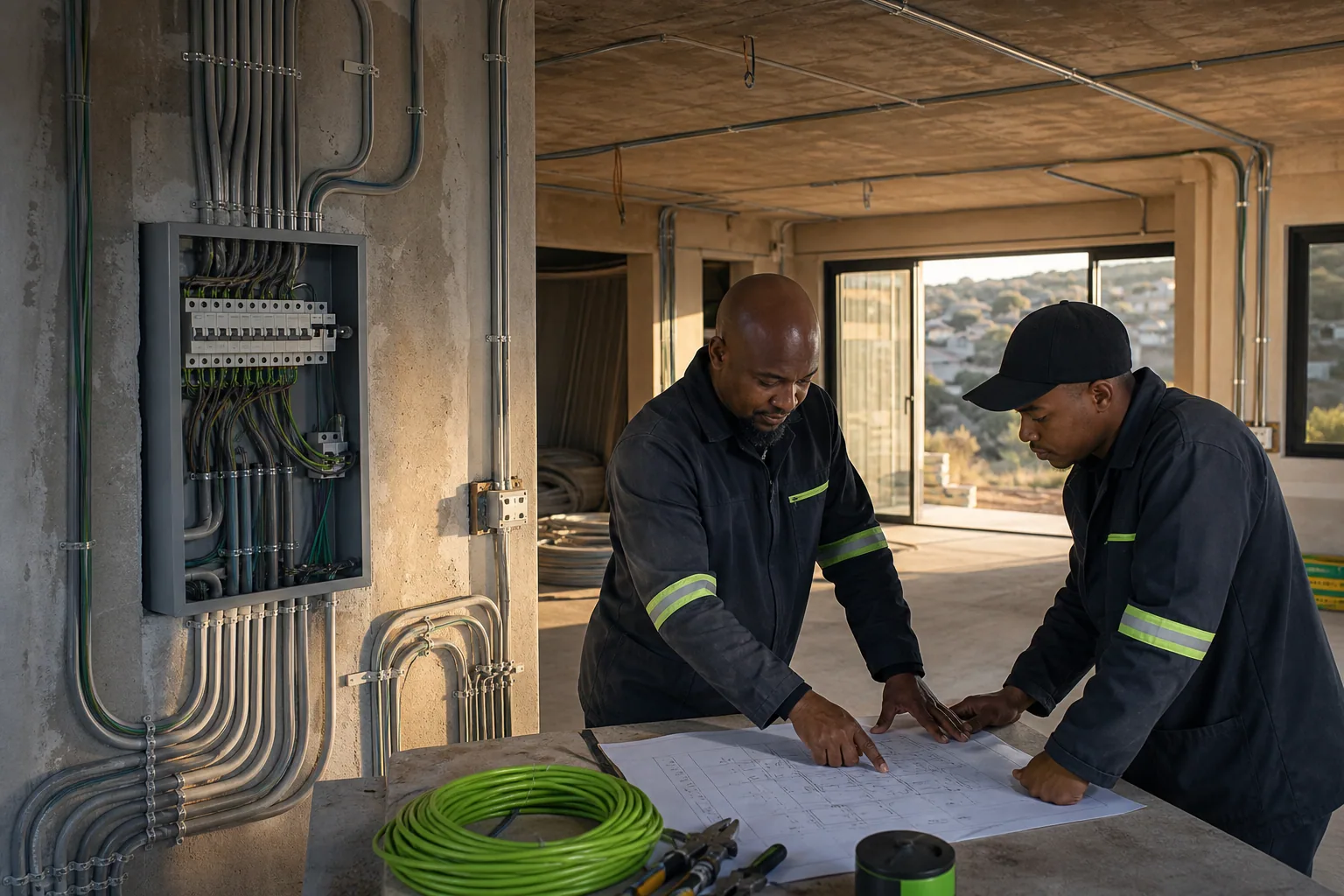

In South Africa, the user or lessor of an electrical installation must have a valid Certificate of Compliance for that installation, subject to the Electrical Installation Regulations. The certificate is especially important when property changes ownership and when electrical work is added or altered.
The practical question is not only ‘Do I own a certificate?’ It is ‘Does the certificate cover the installation as it exists today?’ A certificate from before an inverter, cottage, pool circuit or kitchen alteration may not cover the later work.
01
Selling or transferring property
For a transfer, the regulations say the user or lessor may not rely on a certificate that is older than two years. In practice, the sale agreement and conveyancing process usually require a valid electrical COC before transfer.
Arrange the inspection early. If defects are found, you need time for approval, repairs and retesting. The COC is about electrical compliance, not a general building-condition warranty.
02
New installations, additions and alterations
New electrical installations and work that adds to or alters an existing installation require appropriate inspection, testing and certification. Replacing like-for-like portable equipment is different from changing fixed wiring.
Examples include adding a new circuit, rewiring rooms, moving fixed outlets, installing an outbuilding supply or changing the distribution arrangement. Ask the electrician what part of the installation their certificate covers.
- New house, flat, office or outbuilding installation
- Additional plug, lighting or appliance circuits
- Distribution-board replacement or material alteration
- Pool, borehole, gate or electric-fence electrical supplies
- Generator, inverter or solar integration with fixed wiring
03
Solar, inverter and generator work
Backup and alternative supplies change how energy enters and is isolated from the installation. Correct changeover, protection, earthing, labelling and testing matter. Do not assume the original house COC automatically covers later inverter or solar work.
Request the applicable electrical documentation from the installer and keep it with the original installation records. If multiple contractors work on the system, make their scopes explicit.
04
Landlords, tenants and managed properties
The regulations place duties on the user or lessor to have a valid certificate, while lease agreements may allocate practical responsibilities. Property managers should keep certificates, test reports and alteration records against the correct unit or common area.
A COC does not replace maintenance. Heat damage, cracked fittings, water ingress, tripping or tenant alterations should still be investigated promptly.
05
A five-question certificate check
Use this quick check whenever a property changes, work is planned or records are handed over.
- Do we have the certificate and accompanying test report?
- Does it identify the correct property and installation?
- Was any fixed electrical work done after its issue date?
- For transfer, is the certificate no older than two years?
- Are solar, inverter, generator, outbuilding and electric-fence certificates accounted for?
FAQ
Questions readers also ask
Do I need an electrical certificate to sell my house?
A valid Electrical COC is required for the applicable installation, and for transfer the user or lessor may not rely on a certificate older than two years. The sale agreement and conveyancer will guide the transaction documents.
Do I need a new COC after electrical alterations?
Additions and alterations must be appropriately inspected, tested and certified. The new documentation may cover the added work and should be kept with the existing records.
Does a solar or inverter installation need certification?
Fixed electrical work associated with alternative or backup supplies requires appropriate compliance, inspection, testing and documentation. Confirm the exact certificate scope with the installer.
Is an Electrical COC the same as an electric-fence certificate?
No. An electric-fence system has its own compliance requirements and certificate. A property may need both documents.