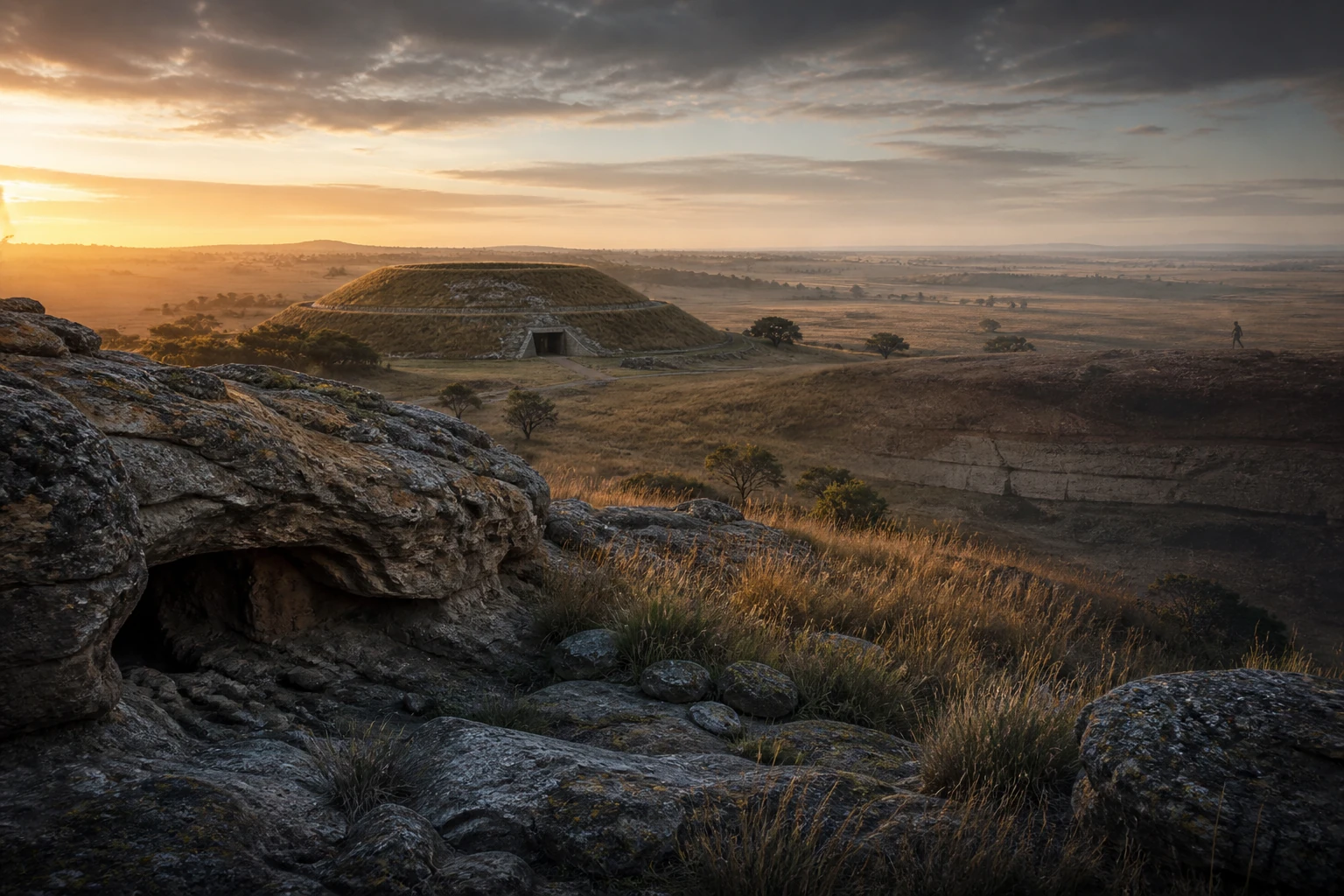
The Cradle of Humankind is not one museum or one cave. It is a much larger World Heritage landscape containing internationally important fossil sites, visitor attractions, places to eat and stay, and working rural properties across the West Rand. That distinction is the key to planning a good visit.
For Krugersdorp residents, this globally significant place is part of the wider local story. Mogale City describes the Cradle as a leading tourism destination within the municipality, while Wits identifies Sterkfontein Caves as being near Krugersdorp. This guide separates the science from the tourism shorthand and gives you a practical way to choose what to see.
01
What is the Cradle of Humankind?
UNESCO lists the property under its formal name, the Fossil Hominid Sites of South Africa. The serial World Heritage Site includes Sterkfontein, Swartkrans, Kromdraai and their environs, together with the Makapan Valley and Taung Skull Fossil Site. These components are not all in one visitor precinct, and some are far beyond Gauteng.
The significance is scientific rather than merely scenic. UNESCO says the sites collectively preserve abundant evidence about human evolution across at least 3.5 million years. Their cave deposits retain fossils, stone tools and environmental evidence that help researchers reconstruct changing species and landscapes.
The first Gauteng components—Sterkfontein, Swartkrans and Kromdraai—were inscribed in 1999. The World Heritage property was extended in 2005 to include the Makapan Valley and Taung Skull Fossil Site. In everyday local use, ‘the Cradle’ often refers to the broader Gauteng heritage and tourism landscape around the West Rand.
02
Maropeng or Sterkfontein: which should you visit?
Choose Maropeng if you want a broad, self-guided introduction to the formation of Earth, human evolution and the discoveries that changed our understanding of ourselves. Its official site describes the experience as interactive and suitable for visitors who want to explore at their own pace.
Choose Sterkfontein if you want a guided cave experience connected directly to a major palaeoanthropological research site. The tour includes stairs, confined areas and uneven surfaces. Wits says the cave route is not suitable for people with mobility challenges or claustrophobia, although the museum, fossil preparation laboratories and Timeline Walk are wheelchair accessible.
If this is your first visit and you have a full day, the two experiences complement each other: Maropeng provides the larger timeline and Sterkfontein provides the physical landscape and research context. They are separately operated, so check and book each experience individually.
| Experience | Best for | Typical visit | Current official guidance |
|---|---|---|---|
| Maropeng Visitor Centre | Families, first-time visitors and a broad human-origins overview | About 45–60 minutes for the main self-guided tour | Open daily, 09:00–16:00; online and on-site tickets listed |
| Wits Sterkfontein Caves | Cave exploration, fossil history and active research context | About 60–90 minutes for a guided tour | Open Tuesday–Sunday, 09:00–16:00; hourly tours listed |
03
Three sensible ways to plan your day
A good itinerary is shaped by your time, mobility and level of interest—not by trying to tick off every attraction in the area. Opening hours, admission prices and tour capacity can change, so use the official links in the sources section before travelling.
- Short visit: choose Maropeng for a concise overview with fewer physical access constraints.
- Half day: choose Sterkfontein, allow time for the guided tour, and avoid scheduling another fixed booking immediately afterwards.
- Full day: visit Maropeng and Sterkfontein, reserving both experiences separately and allowing travel time between them.
- Family visit: check age, mobility and confined-space suitability before selecting the cave tour.
- School or large group: contact the venue in advance rather than relying on ordinary on-site availability.
04
Current visitor details checked for August 2026
Maropeng’s official tour page currently lists the visitor centre as open every day, including weekends and public holidays, from 09:00 to 16:00. It lists the general adult rate at R150, children aged 6–11 at R125, pensioners at R100 with identification, and children under six as free for general family visits. The main tour is described as taking roughly 45 minutes to one hour.
Wits currently lists Sterkfontein as open Tuesday to Sunday, closed on Mondays, from 09:00 to 16:00, with hourly tours and a capacity of 30 people per tour. Its published rates are R150 for adults, R125 for children aged 6–18, R100 for pensioners with identification, and free entry for children under six subject to the stated family limit.
Treat those figures as a dated planning snapshot, not a promise. Confirm the latest price, operating status and ticket availability directly with Maropeng or Wits on the day you plan to visit.
05
What to know before the Sterkfontein cave tour
The cave tour is a physical experience, not a conventional museum walk. Wits advises visitors to expect stairs, narrow passages, uneven ground and places where crouching may be necessary. Closed-toe, non-slip footwear is recommended because surfaces can be wet or slippery.
The caves are not wheelchair accessible and may not suit visitors with claustrophobia, acute asthma or mobility limitations. If the underground tour is unsuitable, ask about the accessible museum, preparation laboratory and Timeline Walk rather than abandoning the visit entirely.
- Wear secure, closed shoes with good grip.
- Leave bulky bags behind and follow the guide’s instructions.
- Do not touch formations, disturb wildlife or remove anything.
- Supervise children and assess whether tight passages will be comfortable for them.
- Confirm suitability with Wits before booking if anyone has a health or mobility concern.
06
Why the Cradle belongs in the Krugersdorp story
The Cradle is often marketed as a Johannesburg day trip, but that description misses its West Rand identity. Mogale City calls itself the City of Human Origin and places the Cradle at the centre of its tourism offering. The municipality’s area includes Krugersdorp and extends into the rural heritage landscape around it.
That local connection is one reason Project Keyword begins here. The subject has broad national search interest, but the most helpful version for this website is rooted in Krugersdorp: clear local context, current official visitor links and a respectful explanation of why the landscape matters.
FAQ
Questions readers also ask
Where is the Cradle of Humankind?
The Gauteng component lies northwest of Johannesburg across the West Rand heritage landscape, including areas near Krugersdorp. The full UNESCO serial property also includes the Makapan Valley and Taung Skull Fossil Site in other provinces.
Is Maropeng the same as the Cradle of Humankind?
No. The Cradle of Humankind is the wider World Heritage property. Maropeng is its official visitor centre and presents a broad, interactive account of Earth and human history.
Are Sterkfontein Caves open in 2026?
Wits currently lists Sterkfontein as open Tuesday to Sunday from 09:00 to 16:00, with hourly guided tours. Check the official Wits visitor page before travelling because operating status and capacity can change.
Can you visit Maropeng and Sterkfontein on the same day?
Yes, they can form a useful full-day combination, but they are separate experiences with separate tickets and schedules. Reserve both and allow travel time between them.
Is Sterkfontein suitable for wheelchairs or claustrophobia?
The underground caves are not wheelchair accessible and are not recommended for people with claustrophobia or mobility limitations. Wits says the museum, preparation laboratories and Timeline Walk are wheelchair accessible.
Why is it called the Cradle of Humankind?
The fossil sites preserve exceptionally rich evidence about early hominins and human evolution over millions of years. UNESCO describes the collective evidence as establishing Africa’s central place in the story of human origins.