South African electrician prices are not set by one national retail tariff. The amount you pay depends on the type of fault or installation, the electrician's experience, travel, timing, access, materials, testing and whether certification is required.
For 2026 planning, published South African market guides commonly place standard electrician labour around R450 to R900 per hour, with emergency call-outs often around R600 to R900 before parts or extended labour. These are broad market indicators, not Wesslink quotations. A written site-specific quote remains the only reliable price for your property.
01
What should you expect to pay an electrician?
The cheapest hourly figure is not automatically the cheapest completed job. An experienced electrician who diagnoses the fault methodically may finish faster, avoid unnecessary parts and leave you with a clear test result. A low rate combined with repeated visits can cost more.
Use the ranges below as a conversation starter. Ask whether VAT, travel, materials, testing, an assistant and making good are included before comparing quotations.
| Cost item | 2026 planning range | What to confirm |
|---|---|---|
| Standard electrician labour | About R450–R900 per hour | Minimum charge and whether time starts at departure or arrival |
| Emergency call-out | About R600–R900 | Whether the first labour period is included and the after-hours rate |
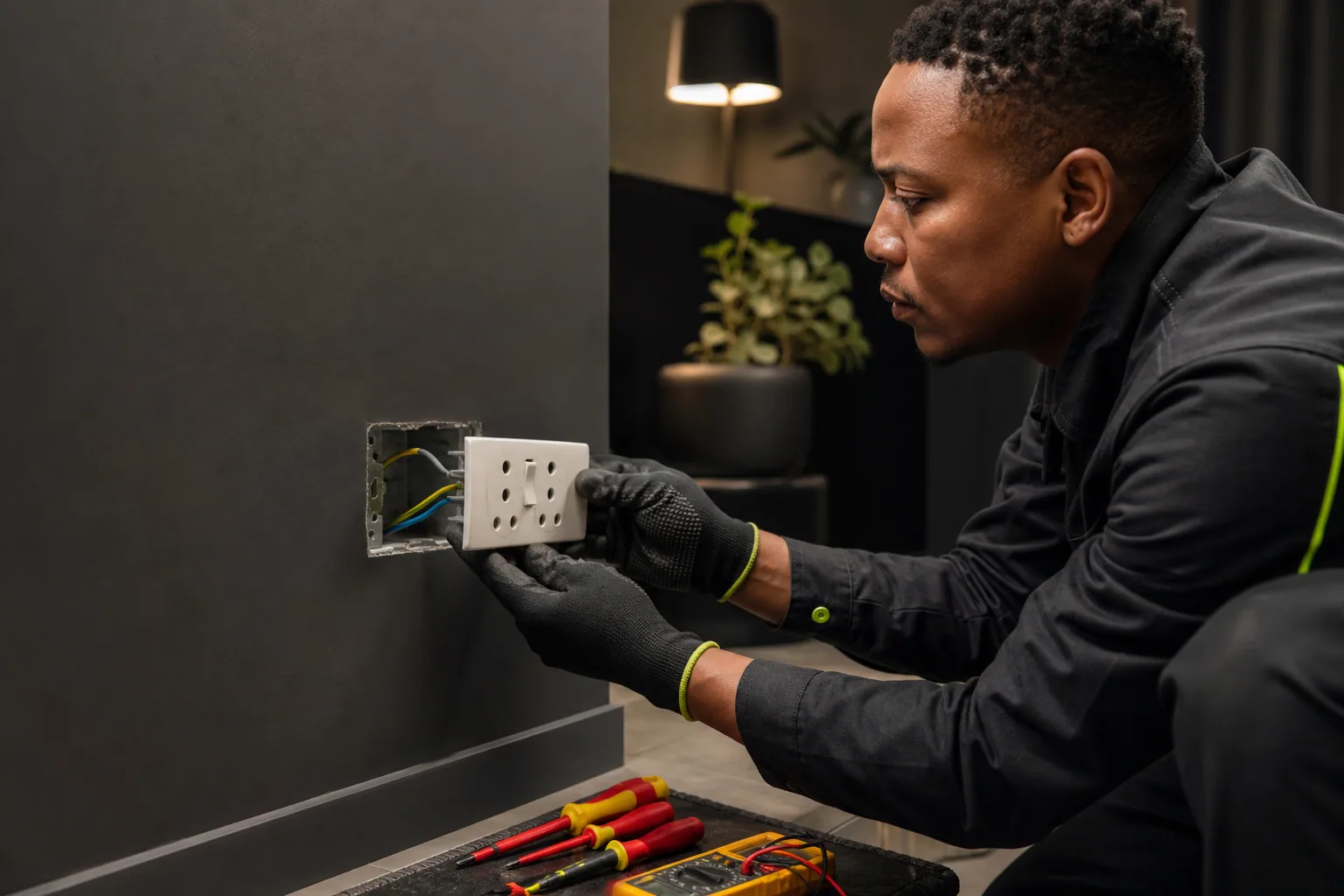
| New standard plug point | Often about R450–R950 in straightforward conditions | Cable route, wall chasing, fitting, testing and call-out |
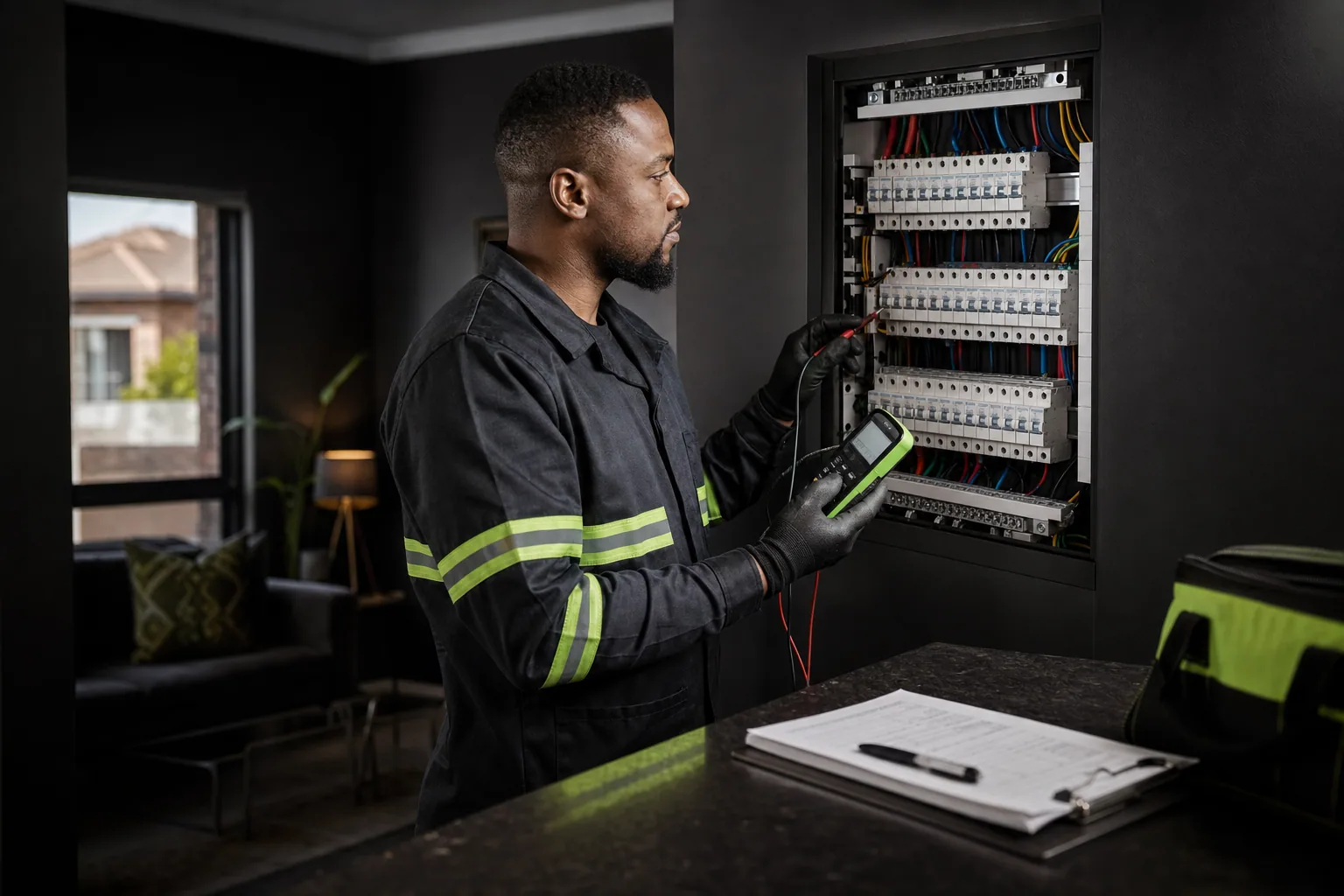
| COC inspection | Often about R850–R2,500 | Inspection only versus repairs, retesting and certificate |
02
How to estimate electrical labour cost
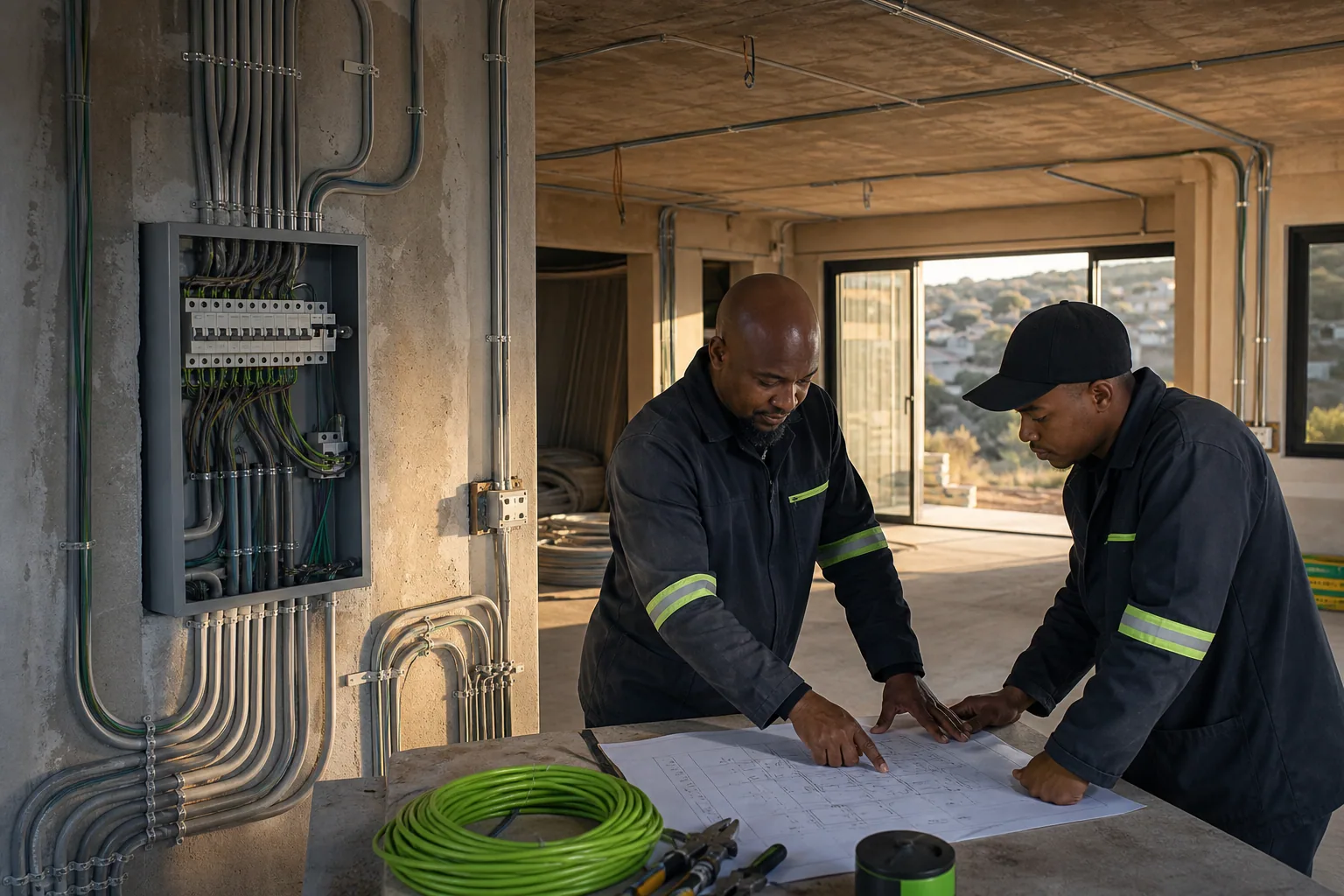
Start with scope, not price. List each problem or required point, the property type, access limitations and any equipment already supplied. An electrician can then estimate time, labour level and materials with fewer unknowns.
A useful planning formula is: estimated hours × labour rate, plus call-out or travel, assistant labour, materials, testing or certification, VAT where applicable and a contingency for hidden conditions. For example, three hours at R650 is R1,950. Add a R650 call-out and R800 of materials and the planning subtotal is R3,400 before VAT or unforeseen work. This is an illustration, not a quote.
- Send clear photographs of the distribution board and work area.
- Explain whether the fault is constant or intermittent and what trips.
- State whether walls are brick, tiled, concrete or lightweight partitioning.
- Ask for approval before the electrician exceeds an agreed diagnostic allowance.
03
What does an electrician call-out fee cover?
A call-out pays for making a qualified person, vehicle and test equipment available at your property. Some contractors include the first 30 or 60 minutes; others charge travel and labour separately. After-hours, weekend and public-holiday rates are usually higher because a technician is being diverted from standby time.
Before booking, ask four questions: the call-out amount, what labour it includes, the hourly rate after that period and whether there is an after-hours surcharge. Also ask what happens if the fault cannot be reproduced during the visit.
05
How to compare two electrician quotes fairly
Put both quotes side by side and compare scope line by line. One price may include a new circuit, protective device, testing and wall repair while another includes only the socket fitting. If the scope is different, the totals cannot be compared honestly.
The strongest quote identifies the property and work area, lists materials or allowances, states what is excluded, explains the payment terms and says whether certification is included. For fault finding, a staged approach is often fairest: approve a diagnostic period first, receive findings, then approve the repair.
- Verify who will perform and supervise the work.
- Ask what warranty applies to workmanship and supplied components.
- Do not accept a COC offered without inspection and testing.
- Keep the quotation, invoice, test results and certificate together.
FAQ
Questions readers also ask
How much do electricians charge per hour in South Africa?
Published 2026 market guides commonly indicate about R450 to R900 per hour for standard work. The actual rate depends on location, expertise, timing, complexity and whether an assistant or specialist test equipment is needed.
What do local electricians charge per hour in Krugersdorp?
There is no compulsory local rate. Request the hourly rate, minimum charge and call-out terms in writing. A fixed price may be more suitable when the scope is clear; an hourly diagnostic allowance may be fairer when the fault is unknown.
How much does an electrician charge for a call-out?
A 2026 South African planning range is roughly R600 to R900 for many emergency call-outs, but after-hours work can be higher. Confirm what labour period, travel and VAT are included.
What are common hidden electrician fees?
Common additions include call-out, minimum labour, after-hours surcharges, assistant labour, materials, wall chasing or making good, testing, certification and VAT. An itemised quote should state these before work starts where they are foreseeable.