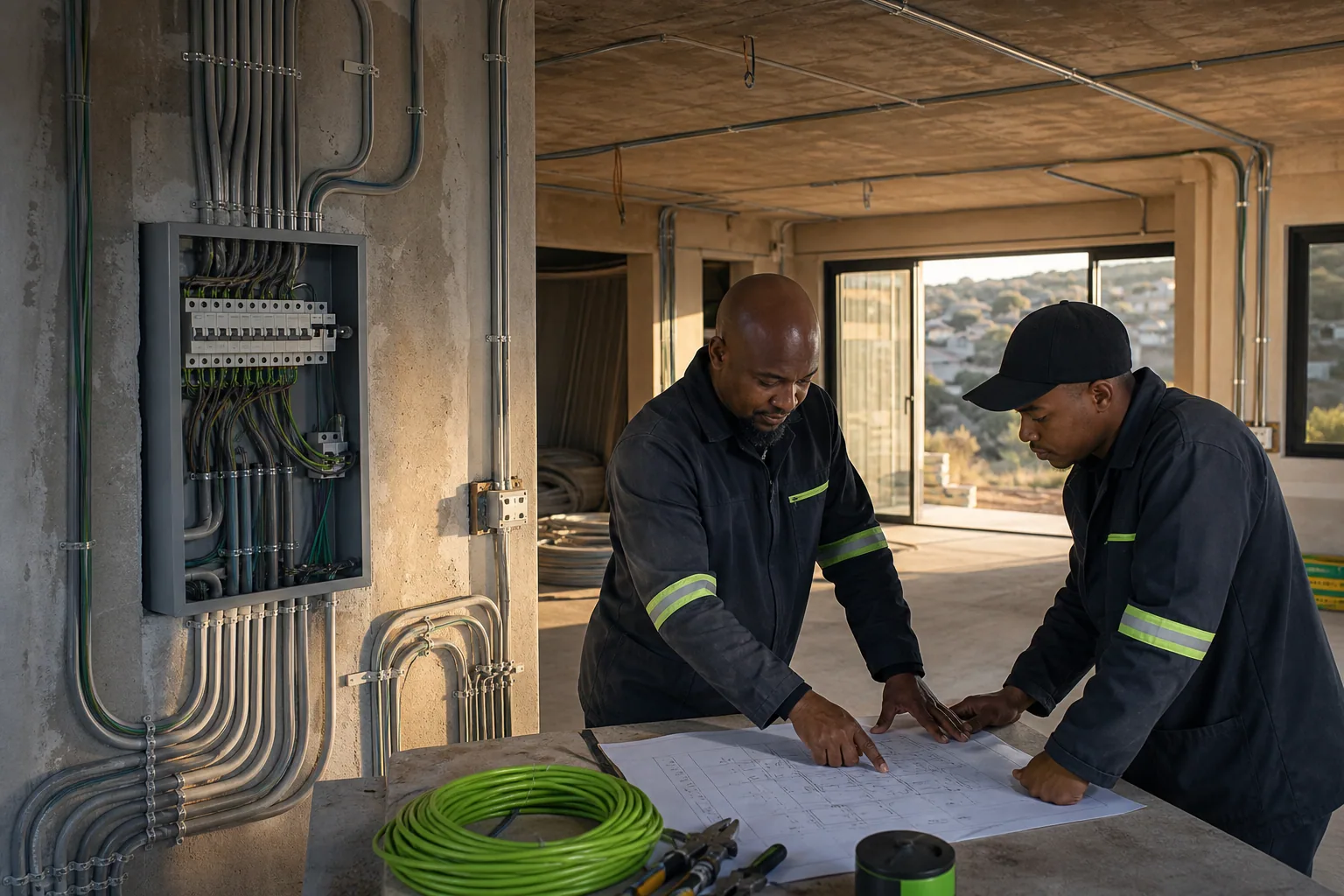

It may be possible to start an electrician pathway without a full matric certificate, but there is no shortcut around competence. South African artisan training combines theoretical learning, structured practical training, workplace experience and a trade test.
Government guidance describes minimum artisan access using mathematics at Grade 9 level or an NCV Level 2 route, with relevant N2 trade theory or vocational subjects for electrical trades. Individual colleges, employers, learnerships and funded programmes can set higher requirements, including matric. Always verify the current entry rules with an accredited provider and the relevant SETA or QCTO pathway before paying fees.
01
The main routes into the electrical trade
The best route depends on what you have already completed. School leavers may enter an occupational programme or apprenticeship. Someone with years of verifiable electrical experience may be assessed through Artisan Recognition of Prior Learning (ARPL).
| Route | Best suited to | What to verify |
|---|---|---|
| Occupational qualification | New entrants needing structured theory, practical and workplace learning | Accreditation, entry level and workplace placement |
| Apprenticeship or learnership | Learners with an employer and mentor | SETA registration, contract and trade-test pathway |
| TVET/N studies plus workplace learning | Learners building electrical trade theory | Correct subjects and how workplace experience will be obtained |
| ARPL | Experienced workers with evidence of prior learning | Eligibility, evidence portfolio, gap training and approved assessment |
02
What to do if you do not have matric
First, collect your highest school results and identify your mathematics and technical subjects. Contact accredited providers and ask for the written entry requirements for the exact electrician qualification code—not a vague ‘electrical course’. If your mathematics foundation is weak, improve it before tackling trade calculations and theory.
Do not assume that one programme's acceptance guarantees access to every apprenticeship or job. Employers and funding programmes may require matric even where another pathway permits a lower equivalent entry level.
- Request the qualification title, NQF level and SAQA/QCTO identifier
- Confirm that the provider and programme are currently accredited
- Ask who arranges the workplace component and qualified mentor
- Confirm the evidence required before trade-test application
- Get all fees, tools, duration and refund terms in writing
03
Course attendance is not the same as artisan qualification
A short course can teach useful skills, but it does not automatically make someone a trade-tested electrician or a registered person authorised to issue Certificates of Compliance. The Occupational Certificate: Electrician is an NQF Level 4 trade qualification with knowledge, practical and workplace components.
After the required training and experience, candidates must meet the applicable trade-test requirements and pass the trade test to qualify as artisans. Registration to perform specialised compliance functions involves further legal requirements.
04
ARPL for experienced electrical workers
Artisan Recognition of Prior Learning is intended for people who acquired substantial skills through work but do not hold the formal artisan credential. It is an assessment route, not an automatic certificate based only on years served.
Candidates generally need verifiable employment evidence, task records and the ability to demonstrate competence. An assessment may identify gaps requiring training before the trade test. Use official National Artisan Development Support Centre guidance and an approved assessment route.
05
A practical 90-day action plan
Spend the first month verifying the route, not paying the first advertiser. In the second month, strengthen mathematics and safety knowledge while applying to accredited providers and employers. In the third, compare written offers and confirm how workplace learning will be recorded.
- Week 1: collect ID, school results, certificates and employment evidence
- Week 2: shortlist accredited providers and contact the relevant SETA
- Week 3: verify entry requirements, qualification code and total costs
- Weeks 4–8: improve maths, English, safety and basic technical theory
- Weeks 6–10: seek a structured workplace or apprenticeship opportunity
- Weeks 10–12: choose the verified route with a documented trade-test pathway
FAQ
Questions readers also ask
Can I become an electrician without matric?
Potentially, through a recognised route with the required lower-level mathematics or vocational entry credentials, workplace learning and trade test. However, many colleges, employers and funded programmes set matric or equivalent as their own requirement.
Does an electrical short course make me a qualified electrician?
No. A short course may add skills but does not by itself replace a recognised occupational qualification, workplace experience and successful trade test.
What is ARPL?
Artisan Recognition of Prior Learning assesses experienced workers against the trade requirements, identifies gaps and can provide a route toward the trade test. Evidence and demonstrated competence are required.
Can every qualified electrician issue a COC?
No. Issuing electrical Certificates of Compliance requires the appropriate registration and legal competence, not only general electrical work experience or a short course.